
Table of Contents
The Psychology of the Shopping Basket: How Design Influences Spend
Walk into any retail store, and one of the first things you encounter isn't a product, a sales associate, or a display—it's a shopping basket. Often dismissed as a simple utility, the humble basket is, in fact, a powerful psychological tool in the retailer's arsenal. Its design, placement, and very presence are carefully calculated elements that can subtly guide consumer behavior, increase average transaction value, and build brand perception. This isn't about the basket itself; it's about the relationship it creates between the shopper and the store.
The shopping basket acts as a physical commitment device. The moment a customer lifts a basket or picks up a cart, they have transitioned from a passive browser to an active shopper with intent. This simple act triggers what psychologists call the "endowment effect," where we begin to ascribe more value to items we perceive as "ours" or within our possession. Placing an item in a basket is the first step toward ownership. Retailers can leverage this by ensuring baskets are readily available at the store entrance and at key decision points throughout the floor, minimizing the friction to this crucial commitment.
The most direct psychological lever is basket size. The principle is simple yet profound: a larger container encourages more filling. This is rooted in the "goal-gradient hypothesis," where people are motivated to complete a task as they perceive themselves getting closer to the finish line. A half-empty large basket feels less "complete" than a full small one, prompting the shopper to add more items to achieve visual and psychological satisfaction. Many retailers have strategically increased the size of their standard baskets over the years, not for practicality, but as a silent suggestion to buy more.
However, size is a double-edged sword. An overly large or heavy basket can backfire. Cognitive load theory suggests that when a task feels physically or mentally taxing, people disengage. A bulky, unwieldy basket that strains the arm becomes a constant reminder of effort, potentially leading to earlier checkout or basket abandonment. The key is "perceived capacity" rather than actual maximum load. A basket should feel light, easy to maneuver, and capable of holding a generous shop without appearing dauntingly empty at the start.
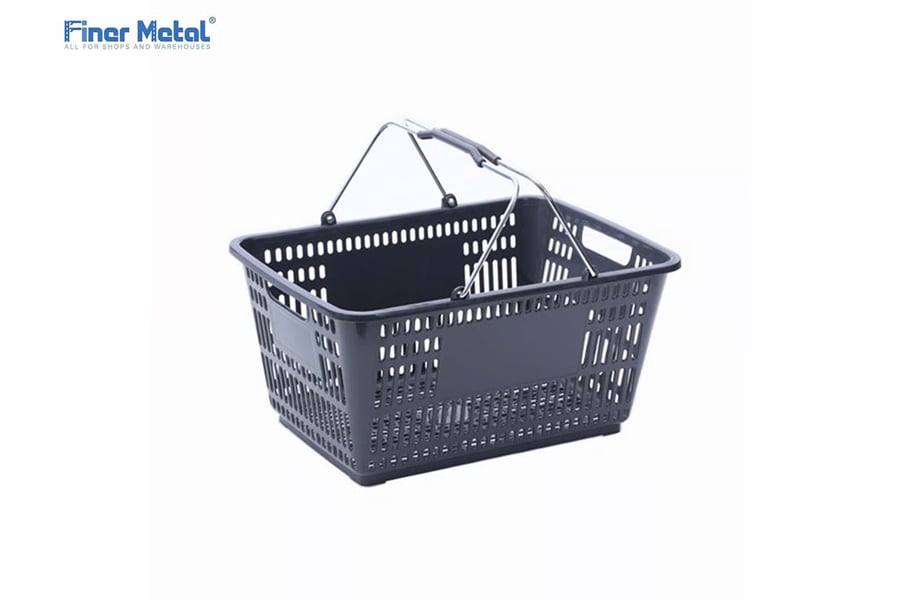
The handle is the critical interface between the shopper and the basket, and its design speaks volumes. A thin, wire-like handle that digs into the palm creates micro-discomfort, subconsciously urging the shopper to finish their task. In contrast, a broad, padded, ergonomically curved handle feels comfortable and secure, extending the shopping duration. The handle placement also matters. A centrally balanced basket hangs naturally, reducing muscle strain and allowing for one-handed browsing, which facilitates easier product selection.
Beyond ergonomics, materials and aesthetics carry psychological weight. A flimsy, low-grade plastic basket signals discount and transience. A sturdy, woven plastic basket or a fabric tote suggests quality, durability, and potentially a more premium shopping experience. Some high-end retailers use branded, fabric-lined baskets that feel like an accessory, reinforcing their brand identity and elevating the entire shopping ritual. The color of the basket is also strategic; a bright, distinctive color makes it easy to spot in a busy store, while a neutral tone keeps the focus on the products.
The evolution from basket to cart is a major psychological checkpoint. The cart represents a significant escalation in shopping intent, often reserved for major stock-up trips. Its enormous capacity virtually demands to be filled, directly enabling the stockpiling behavior seen in warehouse clubs. The act of pushing a cart also changes body language and navigation, making shoppers feel more invested and likely to cover more of the store floor.
Perhaps the most critical psychological moment is basket abandonment. When a shopper leaves a basket full of merchandise in an aisle, it's a failure of the basket's purpose. Often, this is caused by "pain points" that the basket cannot solve: long checkout lines, difficulty navigating crowded aisles with the basket, or the simple lack of a place to temporarily rest it while trying on clothes or comparing products. Smart retailers combat this by ensuring clear aisles, offering convenient "basket drop" zones in fitting areas, and providing efficient checkout options.
In conclusion, the shopping basket is far from a passive vessel. It is a sophisticated touchpoint loaded with psychological cues. Its size whispers suggestions, its handle communicates comfort or urgency, and its material conveys brand value. By applying principles of cognitive psychology, ergonomics, and behavioral economics to basket design and deployment, retailers can craft an environment that reduces friction, extends dwell time, and gently guides customers toward a larger, more satisfying purchase. In the silent dialogue between store and shopper, the basket is one of the most eloquent speakers.