
Table of Contents
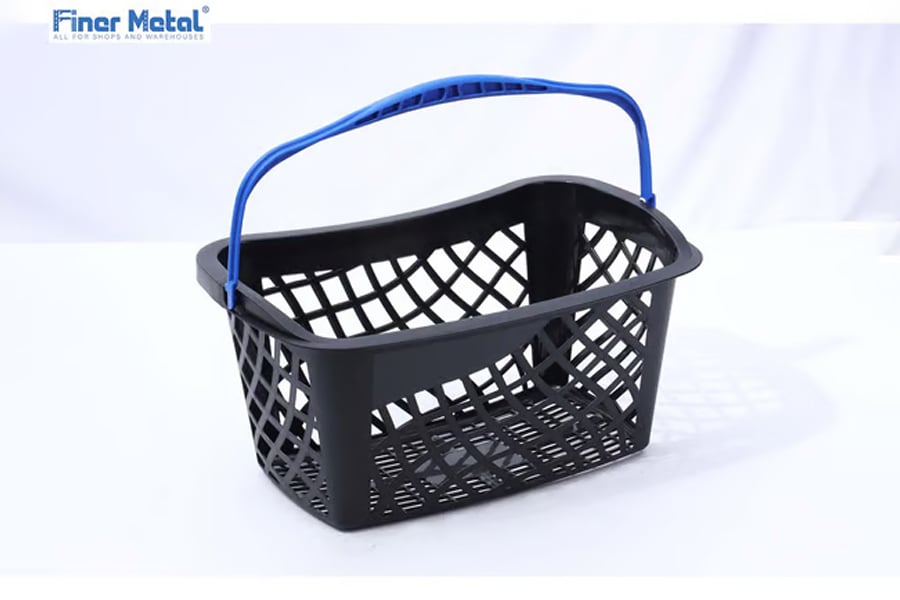
From Hand-Held to Cart Abandonment: The Journey of the Retail Basket
The shopping basket embarks on a parallel journey alongside the customer, a journey with a clear beginning, a critical middle, and a decisive end. For retailers, mapping and optimizing every step of this journey—from the first touch to the final scan—is essential to converting interest into sales and preventing the costly dead-end known as basket abandonment. This journey is a tangible reflection of the in-store experience, and its friction points are direct threats to revenue.
The journey begins with Discovery and Adoption. Baskets must be immediately visible and accessible at the store entrance. This is non-negotiable. A customer should not have to search for the tools needed to shop. Stacking them neatly is not enough; they should be presented in an inviting, grab-and-go manner. Furthermore, "basket stations" should be strategically placed at key decision points deeper in the store—at the end of a promotional aisle, near high-impulse categories like snacks or magazines, or at the entrance to a new department. The goal is to capture customers who entered intending to buy one or two items but might be persuaded to shop more if the means to do so is effortlessly provided.
Once in hand, the basket enters the Collection Phase. This is where the retailer's layout, merchandising, and basket design must work in harmony. Wide, uncluttered aisles are essential for easy navigation with a basket. Products should be within easy reach; high shelves force customers to awkwardly balance the basket, creating physical strain. The basket itself must be a good partner: lightweight, easy to carry even when loaded, and stable enough not to tip over when placed on the floor. A surprising amount of abandonment seeds are sown here through minor irritations—a handle that hurts, a basket that clips every display, or a lack of space to pause and consider items.
A pivotal and often overlooked stage is the Pause Point. Customers are not shopping robots; they need moments to deliberate, compare prices, read labels, or check their phones. If the basket becomes a burden during these pauses, they will seek to shed the load. This is where secondary basket rests, such as small shelves or ledges at the end of gondolas, or designated "basket park" areas in fitting rooms or electronics demo zones, become invaluable. They allow the customer to disengage from the physical weight of the basket without disengaging from the shopping process, preventing fatigue-based abandonment.
The journey's most critical juncture is the transition to the Checkout Zone. This is the moment of maximum psychological and logistical friction. The sight of long, slow-moving lines is the single greatest catalyst for basket abandonment. Customers mentally weigh the value of their basket's contents against the cost of their time waiting. Retailers must combat this with multiple strategies: ensuring lanes are adequately staffed, implementing efficient queue management (like single serpentine lines), and prominently promoting alternative options like self-checkout (SCO) for smaller baskets.
For the basket itself, the checkout process should be seamless. Deep baskets that make it difficult for cashiers to see and scan items create slowdowns. Designs with a low front lip or a flat, stable base that can be easily tilted facilitate faster scanning. For stores with SCO, the entire basket journey can be reimagined. "Scan-as-you-shop" technology allows the basket or a handheld scanner to become the checkout device, rendering the traditional checkout lane obsolete and eliminating the final queue altogether—a powerful antidote to abandonment.
When abandonment does occur, it presents a diagnostic opportunity. A discarded basket is a data point. What items are in it? Where was it found? A basket full of frozen goods abandoned in the home goods aisle suggests the customer couldn't find a quick route to the checkout and feared items would melt. A basket with heavy items abandoned near the entrance may indicate a handle design flaw. Regularly auditing abandoned baskets provides direct feedback on pain points in the store layout, product adjacencies, or operational bottlenecks.
Finally, the journey can—and should—extend Beyond the Store. For retailers offering curbside pickup or BOPIS, the digital "basket" is paramount. The same principles apply: a smooth, intuitive digital basket that saves items, accurately displays inventory, and offers a frictionless payment and collection process is essential. The physical and digital basket journeys are now intrinsically linked, and weakness in one undermines the other.
In essence, the basket's journey is a microcosm of the customer experience. Each point of strain on the basket is a point of strain on the shopper. By meticulously engineering this journey—making adoption effortless, the collection phase comfortable, pause points available, and the conclusion fast and fair—retailers do more than move merchandise. They build a sense of ease and competence that encourages larger purchases, fosters loyalty, and ensures that the basket's journey, like the customer's, ends exactly where it should: at a completed transaction.